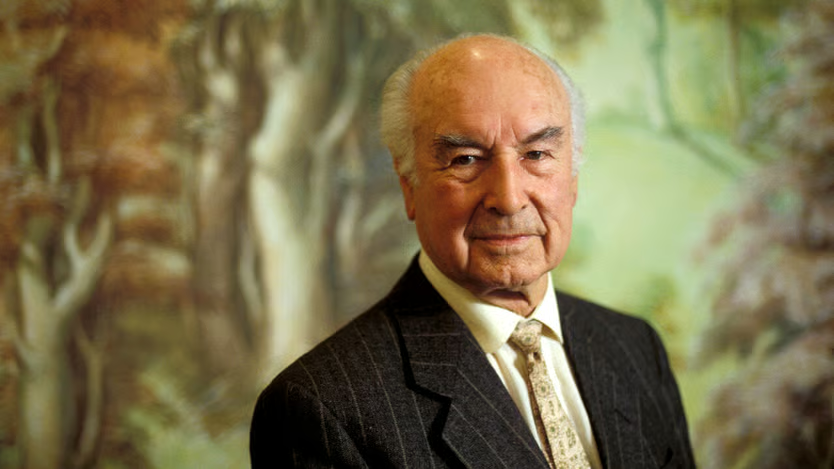
In April 1943, a routine laboratory experiment turned into one of the most unusual and influential moments in modern scientific history. What began as a quiet synthesis by Albert Hofmann soon led to the world’s first experience of LSD, a substance that would go on to reshape medicine, culture, and global debate.
The discovery was accidental. While working with compounds derived from ergot, a fungus used in medicinal research, Hofmann began experiencing strange sensations. Colors appeared more vivid, reality felt distorted, and he described entering a dreamlike state that felt both fascinating and unfamiliar.
Curious and methodical, Hofmann decided to investigate further. A few days later, he deliberately consumed what he believed to be a very small dose. The result was anything but mild.
As the effects intensified, he left his lab and cycled home through the streets of Basel. That journey, now famously remembered as “Bicycle Day,” quickly turned into a disorienting and frightening experience. His surroundings warped, his vision distorted, and by the time he reached home, his sense of reality had almost completely dissolved.
Inside his house, ordinary objects appeared alive and unfamiliar. At one point, even a neighbour who came to help seemed transformed into something terrifying. Hofmann later described moments where he felt as though he had lost his grip on reality entirely. The intense episode lasted for hours before gradually subsiding.
Despite the fear, Hofmann recognised the significance of what he had encountered. He reported his findings to his employer, Sandoz, which soon began exploring LSD’s potential in psychiatry. The drug was distributed under the name Delysid and used in controlled settings to study the human mind, particularly subconscious processes and mental health conditions.
However, LSD’s journey did not remain confined to laboratories. Over time, it spread beyond medical research into wider society, eventually becoming a defining element of 1960s counterculture. Figures like Timothy Leary promoted its use, while experiments such as the US government’s MK-Ultra program explored its psychological effects in more controversial ways.
With growing use came growing concern. Uncontrolled consumption led to “bad trips,” psychological distress, and long-term risks. By the early 1970s, LSD was placed under strict international regulation, effectively banning its widespread use.
Even so, Hofmann’s own view remained complex. He did not see LSD as inherently harmful, but as a powerful substance that demanded respect and careful handling. Used responsibly, he believed, it held potential for therapeutic and scientific insight. Misused, it carried significant risks.
More than eight decades later, that first bicycle ride still stands as a symbol of discovery at its most unpredictable. It revealed not just a new chemical compound, but a deeper question about human consciousness itself.