For most of human history, time was local. Noon was when the sun stood highest over your own town, which meant that a town a few dozen miles to the east kept a slightly different hour. Nobody minded, because nobody could travel fast enough for the difference to matter.
Railways and telegraphs
The railway and the telegraph changed that. A timetable that had to account for dozens of local times was a puzzle; a message that arrived "before" it was sent was an absurdity. Railway companies began imposing their own standard times, and by the late nineteenth century the question of a single reference point for the whole world had become pressing.
The conference
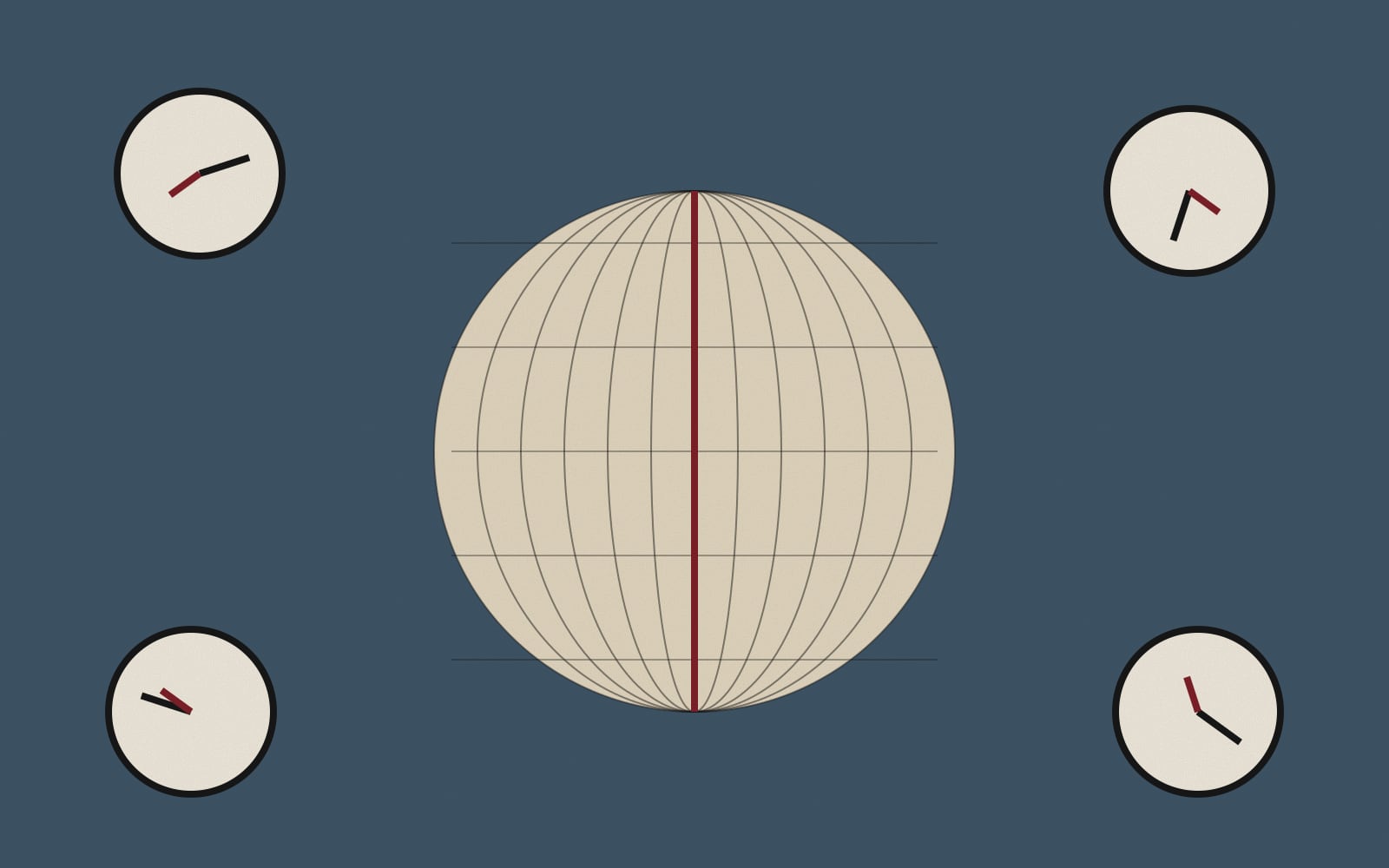
In October 1884 delegates from some twenty-five countries met in Washington for the International Meridian Conference. They voted to adopt the meridian passing through the Royal Observatory at Greenwich as the world's prime meridian — the line of zero longitude from which east and west would be measured.
The choice was not unanimous. Some delegations abstained and at least one voted against, preferring a meridian that belonged to no single nation. But a large share of the world's shipping already used charts based on Greenwich, and practicality won.
A shared hour
Adoption was gradual; some countries kept their own reference times for decades. But the principle had been established. Today we take for granted that the whole planet shares a single system of time, divided into zones. It was not inevitable. It was agreed — in a conference room, by vote.